


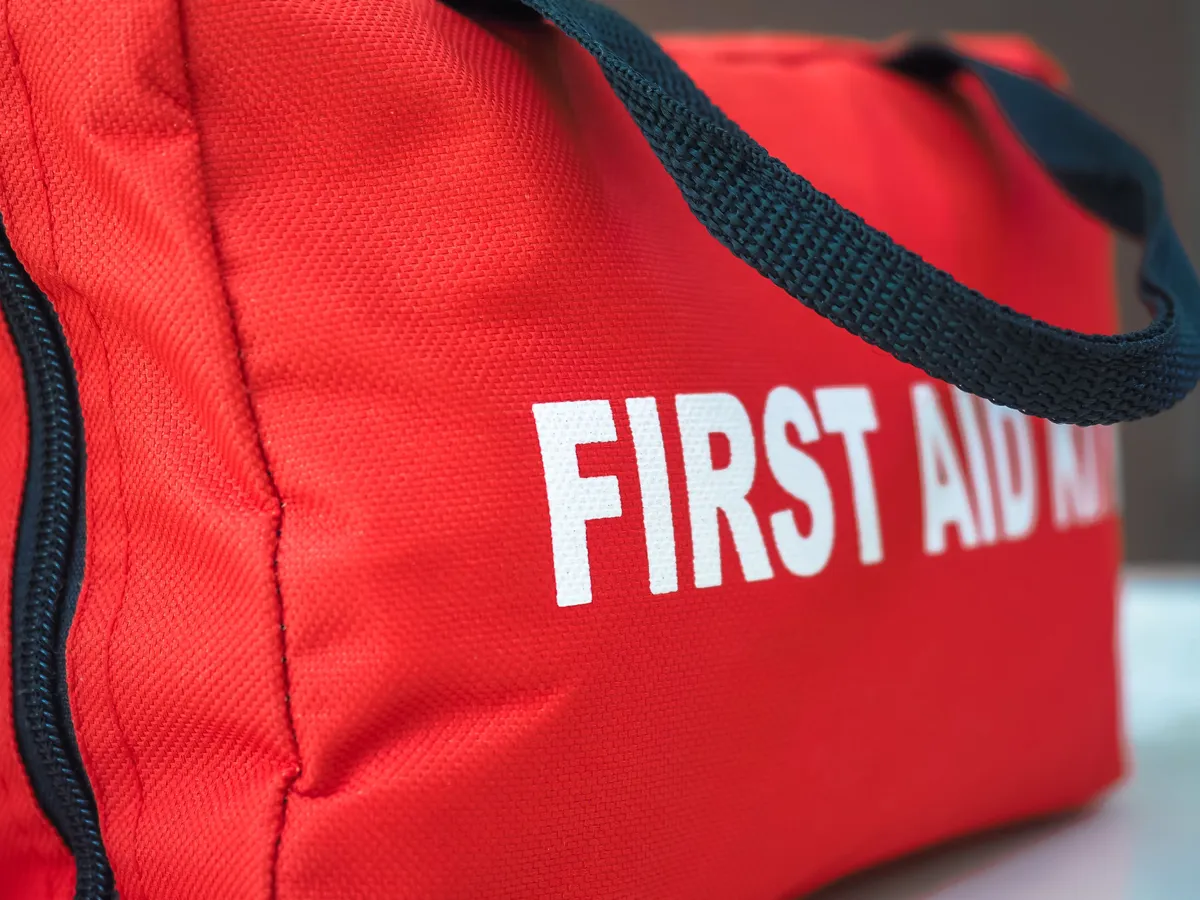
A first aid kit is the most useful thing in any emergency bag, because small injuries are the most common ones: cuts, blisters, burns and sprains. A good kit lets you clean and close a wound, wrap a sprain, deal with a splinter or a sting, and keep someone comfortable until help arrives.
We compared kits on what’s actually inside (proper gauze, wraps and tape rather than 100 plasters padding the piece count), how well they’re organised so you can find things under stress, and the case.
 Best overallFirst Aid Only 298-Piece Family First Aid KitCheck price
 Best for the carSwiss Safe 2-in-1 348-Piece First Aid KitCheck price
 Most completeSurviveX Large First Aid Kit (3–4 people)Check price
 Best for the outdoorsEVERLIT 250-Piece Survival First Aid KitCheck price

First Aid Only 298-Piece Family First Aid Kit
For: the family kit in the hall closet
- Pieces298
- CaseSoft, 2 layers, clear pockets
- IncludesGauze, cold pack, burn cream
- FSA/HSAEligible
The most-reviewed first aid kit on Amazon, and the one we would put in most homes. Per the listing it covers the everyday injuries: fabric and plastic bandages, antibiotic ointment, antiseptic towelettes, burn cream, gauze roll and pads, wound closures and a cold pack, in a soft zip case with two layers of clear pockets, so you can see what you're reaching for.
What we like
- Sensible everyday contents
- Easy to find things in
- Low price, FSA/HSA eligible
Watch out for
- Mostly small-wound supplies
- Add a roller bandage, shears and your medicines

Swiss Safe 2-in-1 348-Piece First Aid Kit
For: the car, the camper and road trips
- Pieces348 + 32-piece mini kit
- CaseHard, impact-absorbing
- OpensFront and back
A large kit in a tough hard case that survives being thrown in a boot, with a front-and-back opening that makes the supplies easy to reach, plus a 32-piece mini kit for a handbag or glovebox. Two kits for one price makes it a good pick for a household with two cars.
What we like
- Bonus mini kit
- Rugged hard case
- Very well organised
Watch out for
- Piece count padded by small items
- Bulky for a backpack

SurviveX Large First Aid Kit (3–4 people)
For: a household that wants more than plasters
- For3–4 people
- OrganisedColour-coded, labelled
- IncludesZip wound closures, splint items
- MountsWall, vehicle, MOLLE
A step up in contents: SurviveX says its supplies go beyond small cuts to sprains, fractures, burns and larger wounds, with emergency zip wound closures, and they are sorted into colour-coded, labelled compartments so you can find the right thing under stress. It mounts on a wall or vehicle or straps to a pack.
What we like
- Contents for bigger injuries
- Excellent organisation
- Wall- and MOLLE-mountable
Watch out for
- Costs several times a basic kit
- Fewer reviews than the long-standing kits

EVERLIT 250-Piece Survival First Aid Kit
For: hikers, campers and a go-bag
- Pieces250
- Bag1000D MOLLE pouch
- ExtrasSpace blanket, flashlight, paracord
A first aid kit and a small survival kit in one water-resistant 1000D MOLLE pouch: per EVERLIT, first aid supplies plus a mylar blanket, a tactical flashlight, a paracord bracelet with compass and whistle, a fire starter and a card tool. It straps to a pack or a car seat and is among the most-reviewed outdoor kits.
What we like
- First aid plus survival basics
- Tough pouch that straps on
- Compact
Watch out for
- Survival gadgets are basic
- Less first aid than the family kits

EVERLIT Emergency Trauma Kit with Tourniquet
For: trained users far from help: hunters, ranchers, remote hikers
- BleedingTourniquet, pressure dressing
- Splint36-inch roll
- AlsoTriangle and elastic bandages
A trauma kit for serious bleeding and fractures: per EVERLIT, a combat-style tourniquet and pressure dressing, a 36-inch splint roll and triangle and elastic bandages.
This is equipment that needs training. Take a Stop the Bleed or first aid course before relying on it, and call 911 first.
What we like
- Bleeding control and splinting in one pouch
- Compact enough for a pack or vehicle
Watch out for
- Needs training to use safely
- Not a substitute for an everyday first aid kit

First Aid Only 10-Person Compact First Aid Kit
For: an office, a workshop or a garage
- Rated10 people
- CaseDurable plastic
- IncludesGloves, scissors, tweezers
A compact plastic-cased kit with the basics plus gloves, scissors and tweezers, in individual compartments. It's the sort of kit to mount in a garage or workshop where small cuts and burns happen.
What we like
- Hard case with compartments
- Includes gloves and tools
Watch out for
- Basic contents
- Smaller than the family kit

Protect Life 100-Piece Travel First Aid Kit
For: day packs, boats and glove boxes
- Pieces100
- CaseWaterproof hard case
- IncludesEmergency blanket, guide
A small waterproof kit with the essentials, an emergency blanket and a first aid guide written by doctors, per the maker. Cheap and small enough to keep one in every bag and boat.
What we like
- Waterproof case
- Includes a first aid guide
- Very inexpensive
Watch out for
- Small quantities
- For minor injuries only

Be Smart Get Prepared 180-Piece First Aid Kit
For: a second kit for the kitchen or a child's room
- Pieces180
- CaseImpact-resistant plastic
- Size8 × 10 × 3"
One of the most widely reviewed budget kits, in a sturdy plastic case with slide latches and organised compartments. The maker says it meets FDA standards as a medical device. A good cheap kit to keep where small accidents happen.
What we like
- Very low price
- Sturdy, organised case
Watch out for
- Mostly bandages
- No cold pack or splinting
What a good kit contains
The American Red Cross’s list for a family of four is a good benchmark: compress dressings, adhesive bandages in several sizes, adhesive tape, antiseptic wipes, antibiotic ointment, hydrocortisone, gauze roll and pads, a roller bandage, an instant cold compress, non-latex gloves, scissors, tweezers, a thermometer, a breathing barrier for CPR, an emergency blanket and a first aid guide.
Then add what only you know you need: your family’s prescription medicines, pain relief, antihistamines, an EpiPen if anyone carries one, and any supplies for a medical condition.
Piece counts are misleading
A “300-piece” kit is often 200 adhesive bandages and some cotton buds. Look at the list for the items that matter: gauze, a roller bandage, a triangular bandage, tape, gloves and shears. The best kits in each price range below are the ones with the most useful contents, not the biggest number.
Trauma kits
A trauma kit or IFAK (individual first aid kit) adds items for serious bleeding: a tourniquet, a pressure bandage and haemostatic gauze. They are useful for people far from help (hunters, remote hikers, workshop users), but they need training: take a Stop the Bleed or first aid course before relying on one.
Keep it current
Check the kit twice a year. Replace anything you have used, and anything past its date: ointments, wipes and medicines expire, and old adhesive stops sticking.
How we rate
We score every pick out of 10 on four things, weighted for what matters when the power is out or the trail is long: whether it does the job when you need it (40%), meaning a filter's rated capacity and what it removes, a radio's reception and charging options, a kit's contents rather than its piece count; build and reliability (25%), including seals, batteries and shelf life and what owners report after months in a closet or a pack; ease of use under stress (20%), whether it can be set up in the dark, with cold hands, by someone who has never used it; and value (15%).
We have not tested these products ourselves. We read the manufacturer's specifications, certifications and instructions and look for the patterns in verified owners' reviews, both the praise and the recurring complaints. No brand pays for placement, and a commission cannot buy a higher rating. When a pick changes, we will say so on this page.
Frequently asked questions
What should be in a home first aid kit?
Adhesive bandages, gauze pads and roll, adhesive tape, a roller bandage, antiseptic wipes, antibiotic ointment, an instant cold pack, gloves, scissors, tweezers, a thermometer, an emergency blanket and a first aid guide, plus your family’s own medicines. That follows the American Red Cross’s list.
How often should I replace a first aid kit?
You don’t need to replace the whole kit, but check it twice a year and restock what is used or out of date.
Do I need a trauma kit?
Most households don’t need more than a good first aid kit. A trauma kit with a tourniquet makes sense if you are often far from help, and only with training such as a Stop the Bleed course.
