


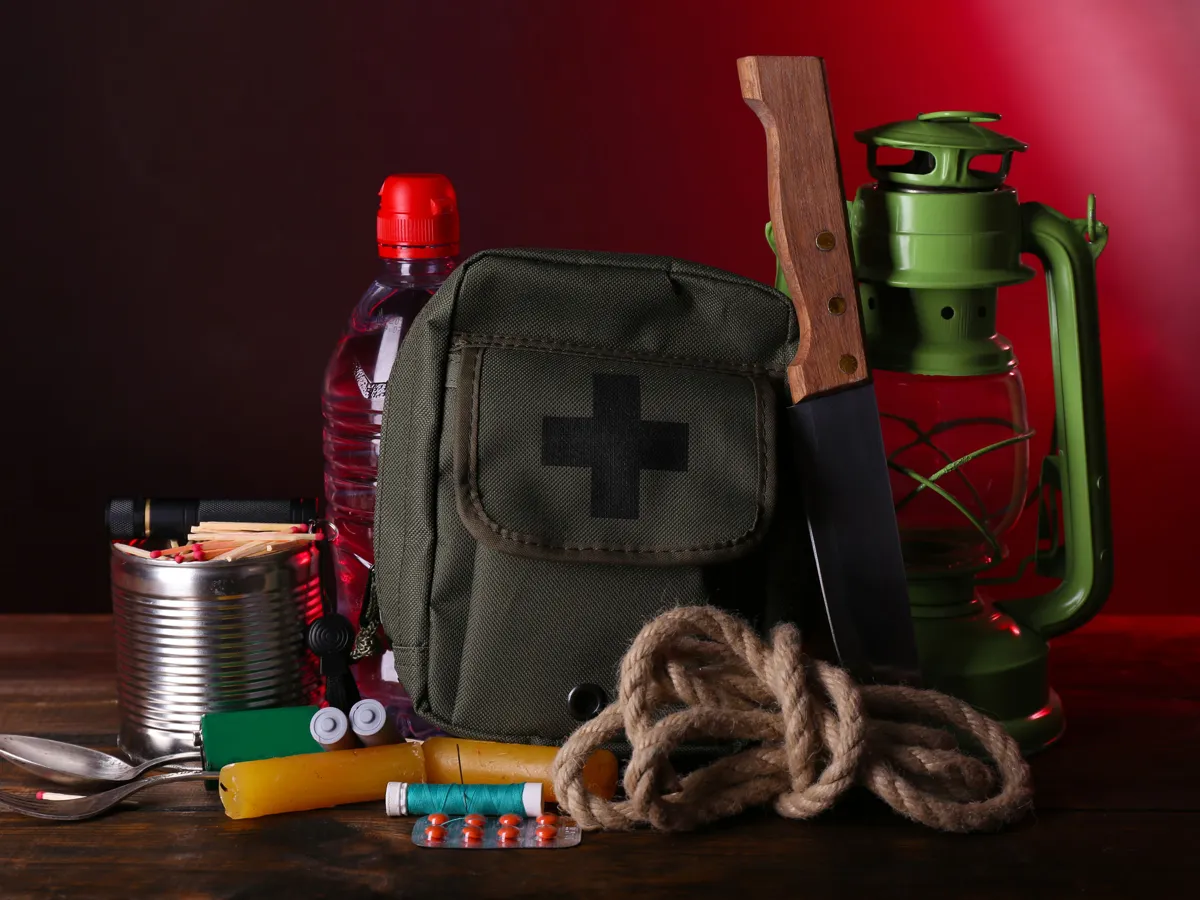
Every household needs the same three things in an emergency: a bag to grab if you have to leave, supplies to stay put through a few days without power or water, and a plan. We have written up the plan in Creating a family emergency plan. This page is the gear.
We built three kits from the picks in our buying guides: a grab-and-go kit for evacuations, a shelter-in-place kit for riding out a storm or a power cut at home, and a whole-household kit that adds backup power, a two-week water and food supply and a proper first aid kit. Every piece links to its full guide, where we compare the alternatives.
The grab-and-go kit
For an evacuation: everything two people need for 72 hours, in a bag by the door. Buy one per two people.
| Piece | Our pick | Why |
|---|---|---|
| Kit | Ready America 2-person 72-hour kit | Food, water pouches, blankets, ponchos and basic first aid in a backpack. All kits |
| Water | Sawyer Mini water filter | Treats the water you find once the pouches run out. All filters |
| Radio | FosPower A1 NOAA crank radio | Weather alerts, a flashlight and a phone top-up. All radios |
| Light | Lepro rechargeable headlamps (2) | One for each person, hands free. All lights |
| Food | S.O.S. 3,600-calorie ration bars | Adds the calories the kit's food bars lack. All food |
The shelter-in-place kit
For riding out a storm or a power cut at home: water, light, information, first aid and food for a family of four for three days or more.
| Piece | Our pick | Why |
|---|---|---|
| Water | Reliance Aqua-Tainer 7 gal (buy two) | Fourteen gallons, the three-day minimum for four. All water storage |
| More water | waterBOB bathtub bladder | Fill 100 gallons when a storm is forecast. All water storage |
| Treatment | Aquatabs purification tablets | Treats viruses as well as bacteria. All filters |
| Radio | Raynic NOAA weather alert radio | Wakes you for warnings; runs on AAA too. All radios |
| Light | Etekcity lanterns (4 pack) | A lantern for every room, on AA batteries. All lights |
| First aid | First Aid Only 298-piece kit | The everyday family kit. All first aid kits |
| Food | ReadyWise 120-serving bucket | A long-life backstop behind your pantry. All food |
The whole-household kit
For a long outage or a household that wants to be properly ready: backup power, two weeks of water and food, and better gear throughout. Build it over a few months.
| Piece | Our pick | Why |
|---|---|---|
| Power | Jackery Explorer 1000 v2 | Keeps a fridge, lights and phones running, safely indoors. All power stations |
| Alerts | Mesqool S.A.M.E. weather radio | County-specific warnings and a big battery. All radios |
| Water | Scepter 5-gallon cans (5 pack) | 25 gallons in tough, portable cans. All water storage |
| Filter | Sawyer Squeeze | Filters water for the whole family, or as a gravity filter. All filters |
| Food | Mountain House meal bucket | Meals everyone will eat; buy two. All food |
| First aid | SurviveX large first aid kit | Supplies for more than small cuts. All first aid kits |
| Light | Lepro rechargeable lantern | Bright, warm light that also charges a phone. All lights |
| Go-bag | EVERLIT 72-hour kit | The most complete grab-and-go bag. All kits |
How to put your kit together
- Start with water. Store a gallon per person per day for at least three days (water storage), and add a filter to treat more.
- Add food you will eat. Three days per person to start, two weeks as a goal (emergency food).
- Light and information. A headlamp per person, a lantern (emergency lights) and a NOAA weather radio.
- First aid and medicines. A real first aid kit plus a week of everyone’s prescriptions.
- The personal layer. Copies of ID and insurance in a waterproof bag, cash, spare glasses, phone chargers, pet food, and anything a baby or an older relative needs.
- Check it twice a year, when the clocks change: replace water, food, batteries and medicines as they expire.
The full buying guides
- The best emergency kits: premade 72-hour kits for one to four people.
- The best survival water filters: straws, squeeze and gravity filters.
- The best emergency water storage: jugs, bricks, barrels and bathtub bladders.
- The best emergency radios: hand-crank NOAA weather radios.
- The best first aid kits: for home, car and the trail.
- The best emergency lights: lanterns, headlamps and crank lights.
- The best portable power stations: backup power that is safe indoors.
- The best emergency food supply: long-life meals, counted in calories.
- The best bug-out backpacks, fire starters, survival knives and multitools.
How we rate
We score every pick out of 10 on four things, weighted for what matters when the power is out or the trail is long: whether it does the job when you need it (40%), meaning a filter's rated capacity and what it removes, a radio's reception and charging options, a kit's contents rather than its piece count; build and reliability (25%), including seals, batteries and shelf life and what owners report after months in a closet or a pack; ease of use under stress (20%), whether it can be set up in the dark, with cold hands, by someone who has never used it; and value (15%).
We have not tested these products ourselves. We read the manufacturer's specifications, certifications and instructions and look for the patterns in verified owners' reviews, both the praise and the recurring complaints. No brand pays for placement, and a commission cannot buy a higher rating. When a pick changes, we will say so on this page.
Frequently asked questions
What is the most important thing in an emergency kit?
Water: one gallon per person per day. After that, food, light, a radio, first aid and your own medicines.
How much does a family emergency kit cost?
A basic grab-and-go kit for two costs well under $100. A full household set-up with stored water, two weeks of food and a power station costs more, so build it over a few months.
Where should I keep my emergency kit?
The grab-and-go bag near the door, a smaller kit in each car, and the shelter-in-place supplies in a cool closet you can reach in the dark.


