


After a hurricane, an earthquake or a burst main, tap water can be off or unsafe for days. Ready.gov asks households to store at least one gallon of water per person per day for at least three days, and to aim for two weeks if they can. For a family of four, that is 12 gallons as the minimum, and over 50 gallons for two weeks.
The right containers make that easy: food-grade, opaque, sized so you can lift them, and with a spigot so you can pour without spilling. We compared the containers below on material, capacity, how easy they are to carry and stack, and how well they seal.
 Best overallReliance Aqua-Tainer 7-Gallon Water ContainerCheck price
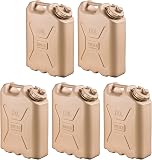 Check price
 Best for a storm warningwaterBOB Bathtub Emergency Water Storage (100 gal)Check price
 Best for small spacesWaterStorageCube Collapsible 5.3-Gallon Container (2-pack)Check price

Reliance Aqua-Tainer 7-Gallon Water Container
For: the backbone of a home water supply
- Capacity7 gallons
- SpigotHideaway, reversible cap
- VentScrew-on
- Warranty5 years
The classic emergency water jug, and among the most-reviewed on Amazon. It is rigid, rectangular so it stacks, with a moulded grip, a screw-on vent and a hideaway spigot for pouring a glass at a time. Two of them hold a family of four's three-day minimum with a little to spare.
A full one weighs about 58 pounds, so fill it where it will stay. Reliance warns that sunlight makes the plastic brittle: keep it in a cool, shaded spot.
What we like
- Spigot for easy dispensing
- Stacks
- Five-year warranty
Watch out for
- Heavy when full
- Store out of sunlight
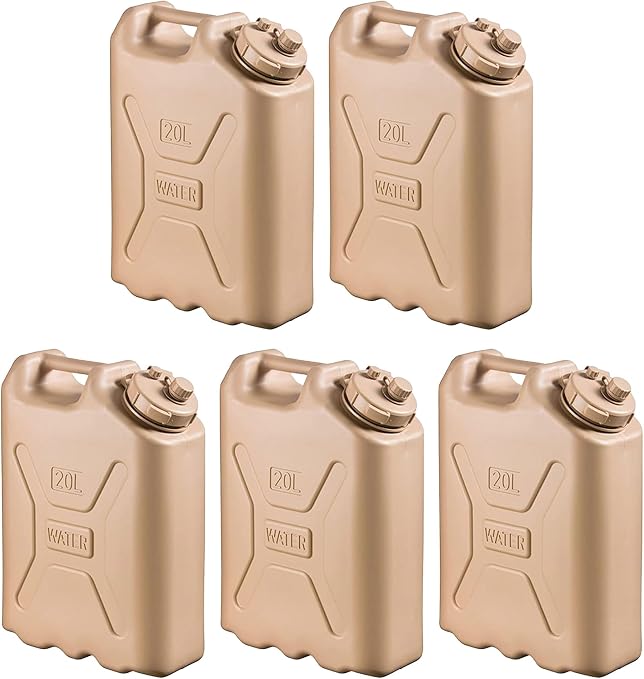
Scepter Military-Style 5-Gallon Water Container (5-pack)
For: water you'll move: car trips, camping and evacuations
- Capacity5 gal each, 25 total
- MaterialFood-grade HDPE/LDPE
- Wall2.5 mm
- Weight4.3 lb empty
Military-pattern cans with thick 2.5 mm walls, a carrying handle and a small spout that fills bottles without spilling. At about 42 pounds full they are the most you will want to lift, and five of them store 25 gallons in a column you can stack in a garage.
What we like
- Very tough
- Carry handle and pour spout
- BPA-free food-grade plastic
Watch out for
- Expensive as a five-pack
- One-year warranty

waterBOB Bathtub Emergency Water Storage (100 gal)
For: filling up the day before a hurricane or a forecast outage
- Capacityup to 100 gallons
- Fresh forup to 16 weeks, per maker
- SetupAbout 20 minutes
- IncludesSiphon pump
A food-grade liner that turns a bathtub into a 100-gallon tank, kept clean of soap film and dust, with a hand pump to fill jugs and pitchers. It is the cheapest way to add a lot of water when a storm is forecast, and folds into a drawer the rest of the year.
It is a short-term supplement: you fill it when a warning is issued, and it needs a bathtub you can do without for a while.
What we like
- 100 gallons for the price of two jugs
- Stores flat
- Pump included
Watch out for
- Single use
- Only when you have warning
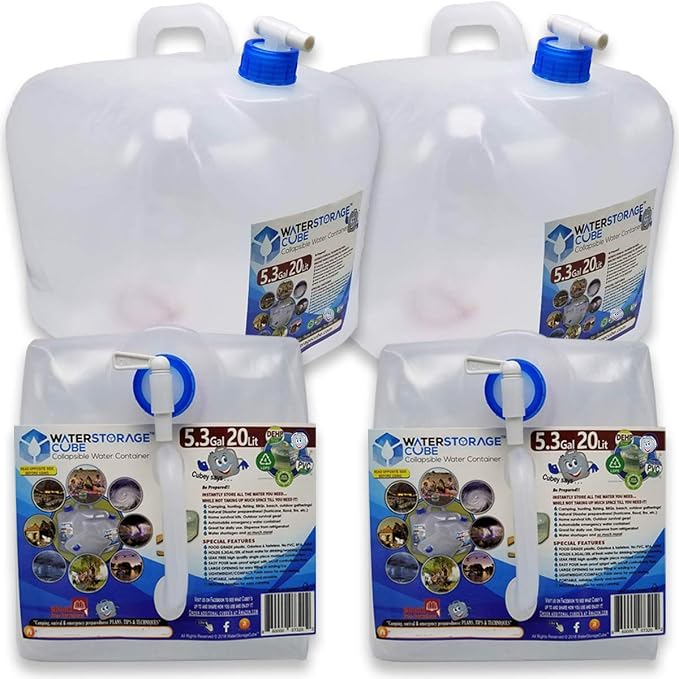
WaterStorageCube Collapsible 5.3-Gallon Container (2-pack)
For: apartments, cars and anyone short on storage space
- Capacity5.3 gal each
- MaterialFood-grade PE, BPA-free
- SpigotGasketless
- FoldsFlat when empty
Folds flat when empty and holds 5.3 gallons when full, with a spigot and soft handles, so you can store two in a cupboard and fill them when a storm is coming. Collapsible containers are less durable than rigid jugs for years of storage, so treat them as the flexible part of your supply.
What we like
- Folds flat
- Spigot included
- Inexpensive for two
Watch out for
- Less durable than rigid jugs
- Can tip when half full
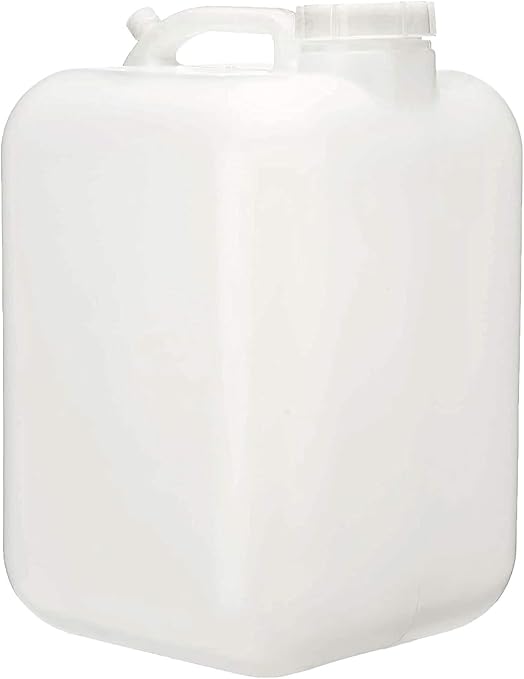
FastRack 5-Gallon Hedpak
For: building up a lot of storage cheaply
- Capacity5 gallons
- MaterialFood-grade, BPA-free
- Cap70 mm threaded
- ShapeSquare, stackable
A plain, square, food-grade 5-gallon container with a wide threaded cap, sold for homebrewing and just as good for water. It is inexpensive enough to buy several and stacks neatly. There's no spigot, so add a pour spout or a siphon.
What we like
- Low cost per gallon
- Stacks in a closet
- Wide mouth is easy to clean
Watch out for
- No spigot
- Thinner walls than the rigid jugs

Mayday Emergency Water Pouches (50 pack)
For: go-bags, car kits and desk drawers
- Pouch125 ml (4.2 fl oz)
- Count50, about 6.25 litres
- Shelf lifeUp to 5 years
- Temp32–149 °F, freezable
Sealed, purified water in small pouches with a five-year shelf life, rated to survive a hot car or freezing. Fifty pouches are about 6 litres, a little over a day and a half of Ready.gov's gallon a day for one person, so they belong in bags and cars, not as your household supply.
What we like
- Five-year shelf life
- Fine in a hot car
- Easy to share out
Watch out for
- Expensive per gallon
- Small amounts only

Water Preserver Concentrate (treats 55 gallons)
For: extending the time between refills
- Treats55 gallons
- StorageUp to 5 years, per maker
- Use by1 year from manufacture
A concentrate added to clean tap water when you fill your containers, which the maker says keeps it for up to five years instead of the six months Ready.gov suggests for untreated home-filled water. Follow the dosing on the bottle, and use it within a year of the date on it.
What we like
- Fewer refills
- Treats a whole barrel
Watch out for
- Must be used within a year of manufacture
- Still rotate if in doubt
How to store water safely
- Use food-grade containers. Look for “food grade” and BPA-free plastic (HDPE, recycling code 2). Never reuse containers that held milk or juice, which are hard to clean and break down, or anything that held chemicals.
- Clean and sanitise new containers before filling, then fill from the tap. Water from a treated municipal supply needs no further treatment before storage.
- Store it cool, dark and off the floor, away from petrol, pesticides and other chemicals: plastic is slightly permeable to vapours.
- Replace it every six months. That is Ready.gov’s advice for water you have bottled yourself; commercially bottled water can be kept to its expiry date. A water preserver can extend the interval, following its instructions.
Which size?
- 5–7 gallon jugs are the easiest to handle: a full 5-gallon jug weighs about 42 pounds. Several jugs are better than one big tank because you can carry them, and one leak does not lose everything.
- Stackable bricks fit under beds and in closets, and are the best choice for flats.
- 55-gallon barrels store the most water in the least space but are about 460 pounds full and need a pump and a bung wrench. Put them where they will stay.
- Bathtub bladders are filled when a storm is forecast and hold up to 100 gallons for a week or two. They are a short-term supplement, not long-term storage.
Pair stored water with a way to treat more: a portable water filter and a pack of tablets.
How we rate
We score every pick out of 10 on four things, weighted for what matters when the power is out or the trail is long: whether it does the job when you need it (40%), meaning a filter's rated capacity and what it removes, a radio's reception and charging options, a kit's contents rather than its piece count; build and reliability (25%), including seals, batteries and shelf life and what owners report after months in a closet or a pack; ease of use under stress (20%), whether it can be set up in the dark, with cold hands, by someone who has never used it; and value (15%).
We have not tested these products ourselves. We read the manufacturer's specifications, certifications and instructions and look for the patterns in verified owners' reviews, both the praise and the recurring complaints. No brand pays for placement, and a commission cannot buy a higher rating. When a pick changes, we will say so on this page.
Frequently asked questions
How much water should I store for an emergency?
At least one gallon per person per day for at least three days, according to Ready.gov, and two weeks if you can. Store extra for pets, hot weather, pregnancy or illness.
How long can you store tap water?
Ready.gov advises replacing water you have stored yourself every six months. Commercially bottled water can be kept until its expiry date.
Is it safe to store water in plastic?
Yes, in food-grade plastic made for water, kept cool and out of sunlight and away from chemicals. Avoid milk jugs and anything that has held a non-food product.

